
How We Support Energy Resilience Across Commercial Estates
Why Energy Resilience Matters
Energy resilience is no longer just about backup power. It is about ensuring buildings can operate reliably, cost-effectively and sustainably in the face of rising energy costs, grid pressure and decarbonisation targets.
Across the UK, organisations are dealing with volatile electricity pricing, increasing grid constraints and connection delays, alongside growing pressure to meet net zero and ESG commitments. At the same time, much of the existing infrastructure is ageing, creating additional maintenance and performance challenges.
For estates teams, this has shifted the focus from simply consuming energy to actively managing it.
What Energy Resilience Looks Like in Practice
Energy resilience is the ability of a building or estate to maintain performance under changing conditions. This includes reducing reliance on the grid, maintaining operations during disruption, controlling long-term costs and having clear visibility of how energy systems are performing.
In practical terms, it comes down to three core elements: generating energy on site, reducing demand, and monitoring performance effectively.
Generating Power at the Point of Use
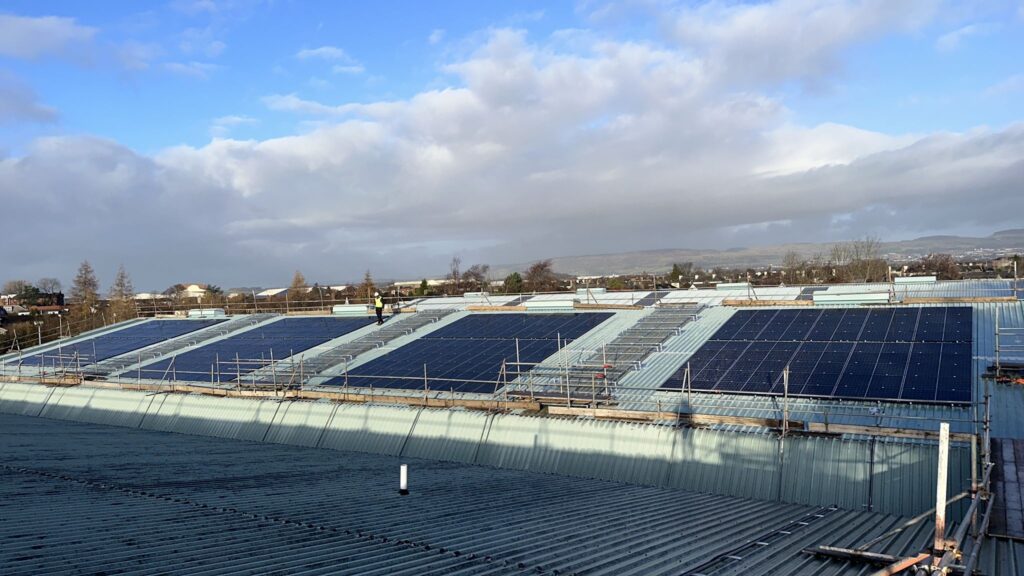
On-site generation is the foundation of energy resilience. Solar PV allows buildings to produce electricity where it is needed, reducing exposure to grid supply and price fluctuations.
At Gamma’s data centre in Manchester, we delivered a solar PV solution designed to reduce reliance on grid electricity and support long-term energy cost control. By installing on-site generation aligned to the building’s demand profile, the system provides consistent daytime energy production while contributing to the organisation’s wider carbon reduction strategy.
Projects like this show how commercial buildings can take greater control of their energy supply while improving resilience against market volatility.
Reducing Demand Through Intelligent Infrastructure
Once energy is being generated on site, the next step is to reduce how much is required in the first place.
Lighting remains one of the largest energy loads in many buildings. Upgrading to LED, combined with intelligent controls, can significantly reduce consumption while improving usability and compliance.
At a London hospital, we delivered a full intelligent lighting upgrade across a live clinical environment. The project achieved an 80% reduction in electricity consumption, alongside a saving of 240 tonnes of CO₂ in the first year. The system also delivered a return on investment in under four years.
This type of demand reduction works alongside solar generation to strengthen overall energy resilience.
The Importance of Monitoring and Control
Resilience is not just about installation, it depends on visibility and control.
Without proper monitoring, systems can underperform without being noticed. Faults can go undetected, and energy savings can be lost over time. By integrating intelligent monitoring and control systems, estates teams gain real-time insight into performance, allowing them to identify issues early and manage systems proactively.
This also supports compliance, reporting and long-term asset management, particularly across larger or multi-site estates.
A Joined-Up, Turnkey Approach
Delivering energy resilience requires coordination across multiple systems, including solar generation, electrical infrastructure, lighting and controls. Managing these elements separately can create inefficiencies and gaps in performance.
We deliver these as a single, integrated solution. By taking responsibility for design, installation and commissioning, we ensure that each part of the system works together effectively and delivers the expected outcomes. This approach simplifies delivery for estates teams while improving long-term performance.
Supporting Multi-Site Estates
For organisations managing multiple buildings, energy resilience must be scalable. Solutions need to be consistent, repeatable and aligned to budget cycles.
We support phased rollouts across portfolios, enabling organisations to standardise design, track performance consistently and implement improvements over time. This is particularly relevant for healthcare estates, education campuses, local authorities and commercial property portfolios.
Delivering Measurable Outcomes
Energy resilience should deliver clear results. Across our projects, this typically includes reduced reliance on grid electricity, lower operational costs, improved system performance and measurable carbon savings.
These outcomes are achieved through a combination of generation, efficiency and control, rather than a single intervention.
Looking Ahead
As the UK energy system continues to evolve, buildings that rely solely on grid supply will face increasing cost and operational pressure. Those that invest in on-site generation, efficient infrastructure and intelligent control systems will be better placed to manage risk and maintain performance. Energy resilience is not a single project. It is an ongoing strategy that supports long-term operational and financial stability.