A low-profile solar and battery system for a heritage farm
5.23kWp
System size
4,126kWh
Annual generation
98%
Power used on site
870kg
CO₂ avoided each year
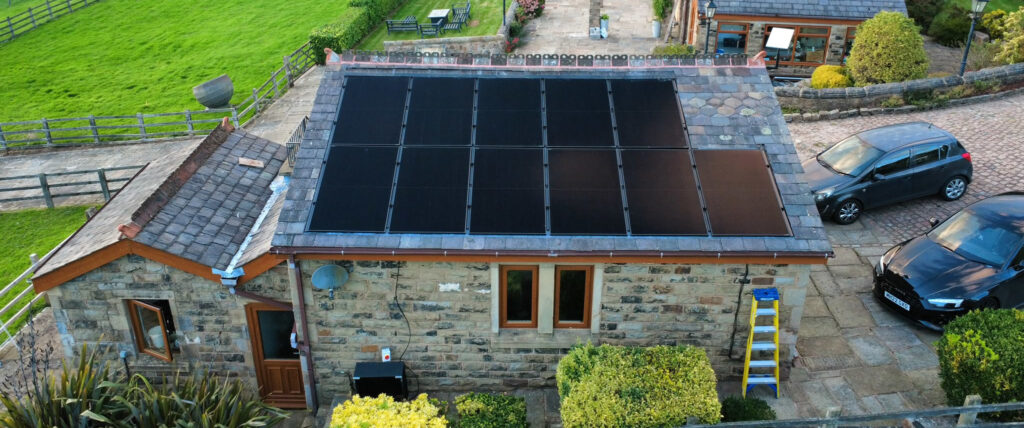
Not every solar project is measured in megawatts. At a farm in Wrightington, near Wigan, we designed and installed a 5.23kWp solar PV system with battery storage. It sits a long way below the scale of our 1.42MW Larkins Farm installation, but the setting made it a project worth getting right: a farm with heritage character, where how the system looks matters as much as how much power it produces.
The Brief
The farm uses around 15,500kWh of electricity a year, with a peak demand of 2.4kW. That is a steady, modest load, which suits a smaller system sized to be used on site rather than exported. The heritage setting shaped the rest of the brief as the panels needed to sit as quietly as possible on the roof, and the inverter and batteries needed a home away from the main house.
The Design
Before settling on a layout, we modelled the system in PV*SOL using climate data for the areas. The roof faces south-east at a 26 degree pitch, which is not the ideal orientation but is a common one on traditional buildings. The model puts shading losses at 5.3%, the performance ratio at 79.8%, and the specific yield at 833kWh for every kWp installed.
The Installation
Eleven 475W Longi panels went on using the GSE In-Roof system, which fits the panels into the roof covering rather than mounting them above it. That keeps the roofline flat and the profile low, a good fit for a building where appearance matters.
The SolaX hybrid inverter and two T58 batteries sit in the annex compound, connected through the annex distribution board to the main house board. The inverter’s 3.68kW rating keeps the installation within the G98 connection process for small generators, and the G98 installation paperwork for Electricity North West was completed as part of the handover.
What It Delivers
Because the batteries store daytime surplus, the design model shows around 98% of the power the system generates being used on the farm, with only about 100kWh a year exported. The batteries do much of that work. They take in around 1,100kWh of solar power a year and return around 1,040kWh of it to the farm when the panels are not producing. Overall, solar and storage together cover about 27% of the farm’s electricity use and avoid roughly 870kg of CO2 each year.
Certified & Covered
The system was commissioned in September 2026 and is MCS certified. The panels carry a 25 year performance warranty and the inverter and mounting system each carry 10 years, while we cover labour and workmanship for 12 months.
The farm project shows that scale is not what decides whether a solar installation is done properly. The same design, certification and connection process applies at 5kWp as it does at 1.4MW.