
The UK’s renewable energy mix is evolving quickly, and solar is taking the lead.
While wind, hydro, and biomass all play a role in decarbonising the grid, solar is becoming the go-to option for commercial and industrial users. The three charts below explain why businesses are increasingly choosing solar over other renewables.
Commercial Rooftop Solar Installations Are Surging
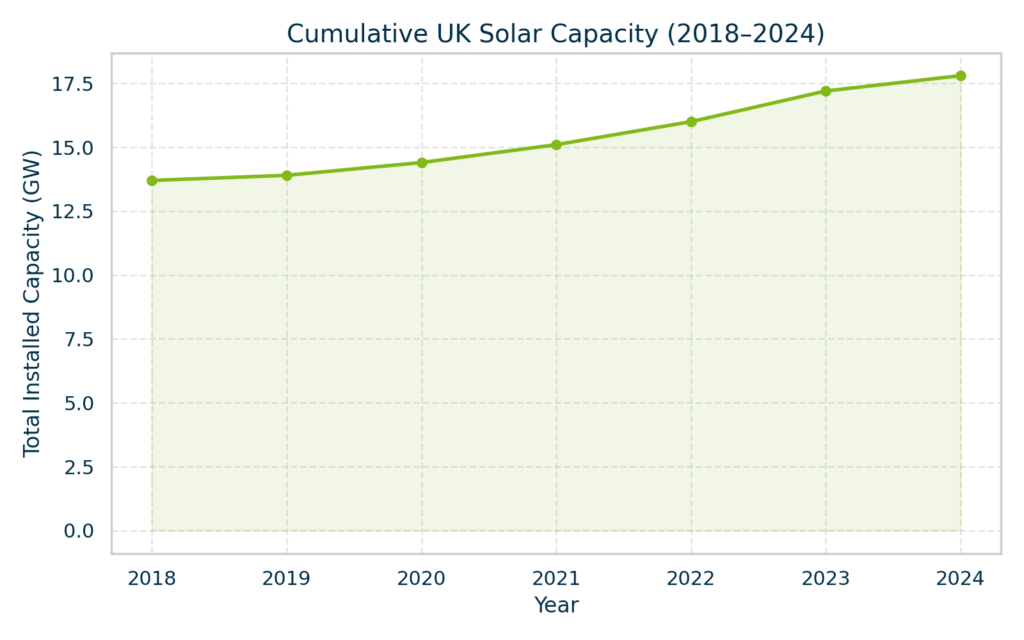
Total installed solar capacity in the UK has grown from 13.7 GW in 2018 to an estimated 17.8 GW in 2024, driven by increased commercial rooftop adoption and rising demand for onsite generation.
Source: Department for Energy Security and Net Zero (DESNZ) – Solar Photovoltaics Deployment
The growth in rooftop solar panels for commercial properties is outpacing other sectors. With flat roofs, large surface areas, and high daytime electricity usage, businesses are ideally placed to benefit from solar panel installation.
The simplicity of installation, often without planning permission, and quick payback are making it a first choice for energy-conscious property owners.
Solar Is Now the UK’s Cheapest Source of New Power

Solar PV is now the UK’s lowest-cost source of new electricity, with an average LCOE of £41/MWh, compared to £45/MWh for onshore wind and £114/MWh for new gas generation.
Source: DESNZ – Electricity Generation Costs 2023
According to recent BEIS data, solar PV has become the lowest-cost renewable energy option for new build projects. It now beats both onshore wind and grid electricity when it comes to the average cost per megawatt hour (MWh).
That price advantage, combined with growing pressure to reduce Scope 2 emissions, is helping solar stand out as the financially sound route to sustainability.
Planning Success Rates Favour Solar Over Other Renewables
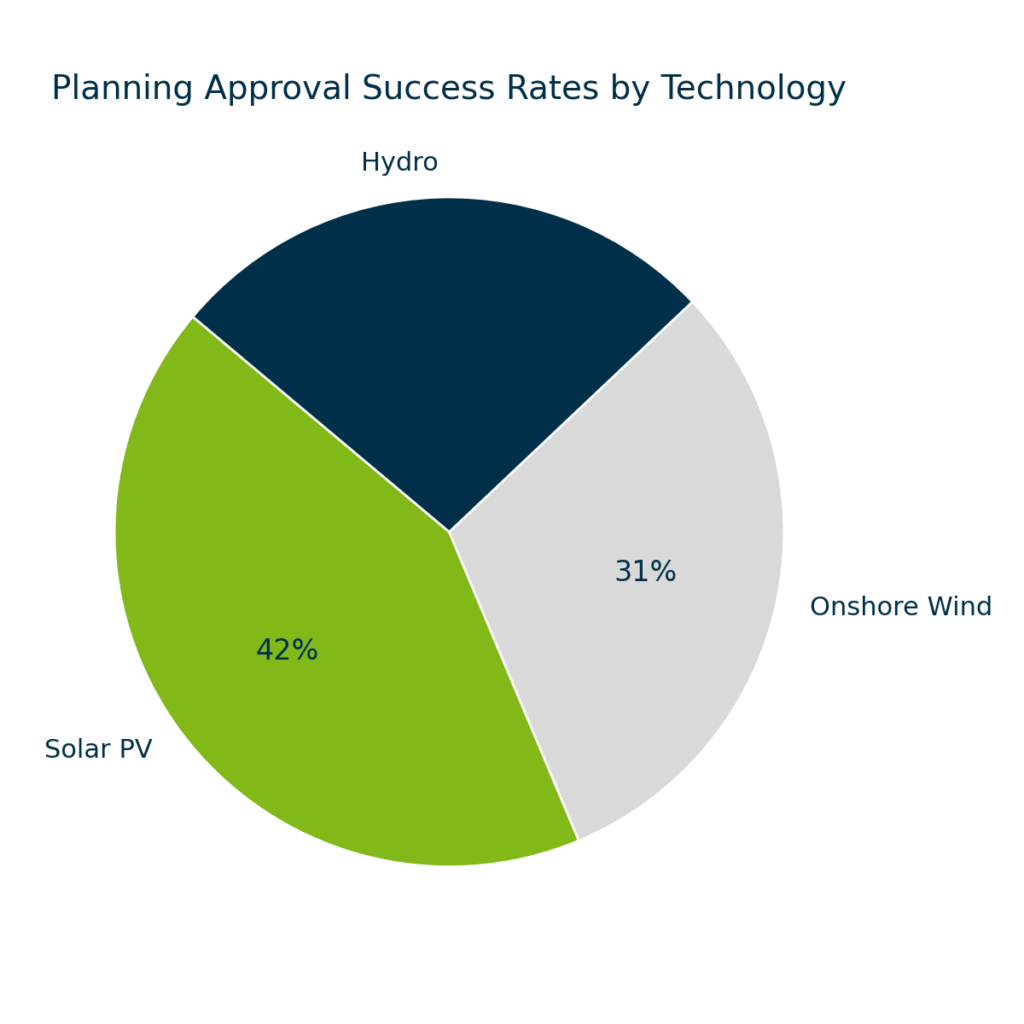
Solar PV continues to see higher planning success rates compared to other renewables, thanks to fewer objections, simpler installations, and widespread eligibility for permitted development.
Source: EdenSeven Q4 2024 Planning Data; REPD (gov.uk)
Large infrastructure projects often get stuck in red tape, but solar has a high success rate in the UK planning system, especially for rooftop systems, many of which fall under Permitted Development rules.
This means businesses can act quickly, without lengthy consultations or public objections, getting from idea to installation faster.
What This Means for Commercial Energy Users
Solar is accessible, affordable, and scalable. It offers a clear path to reducing both costs and carbon without major operational disruption. For commercial property owners, it’s a practical, proven solution that is ready to install now.
Interested in how solar could work for your business?
Contact us to speak to one of our energy consultants or request a free site assessment.