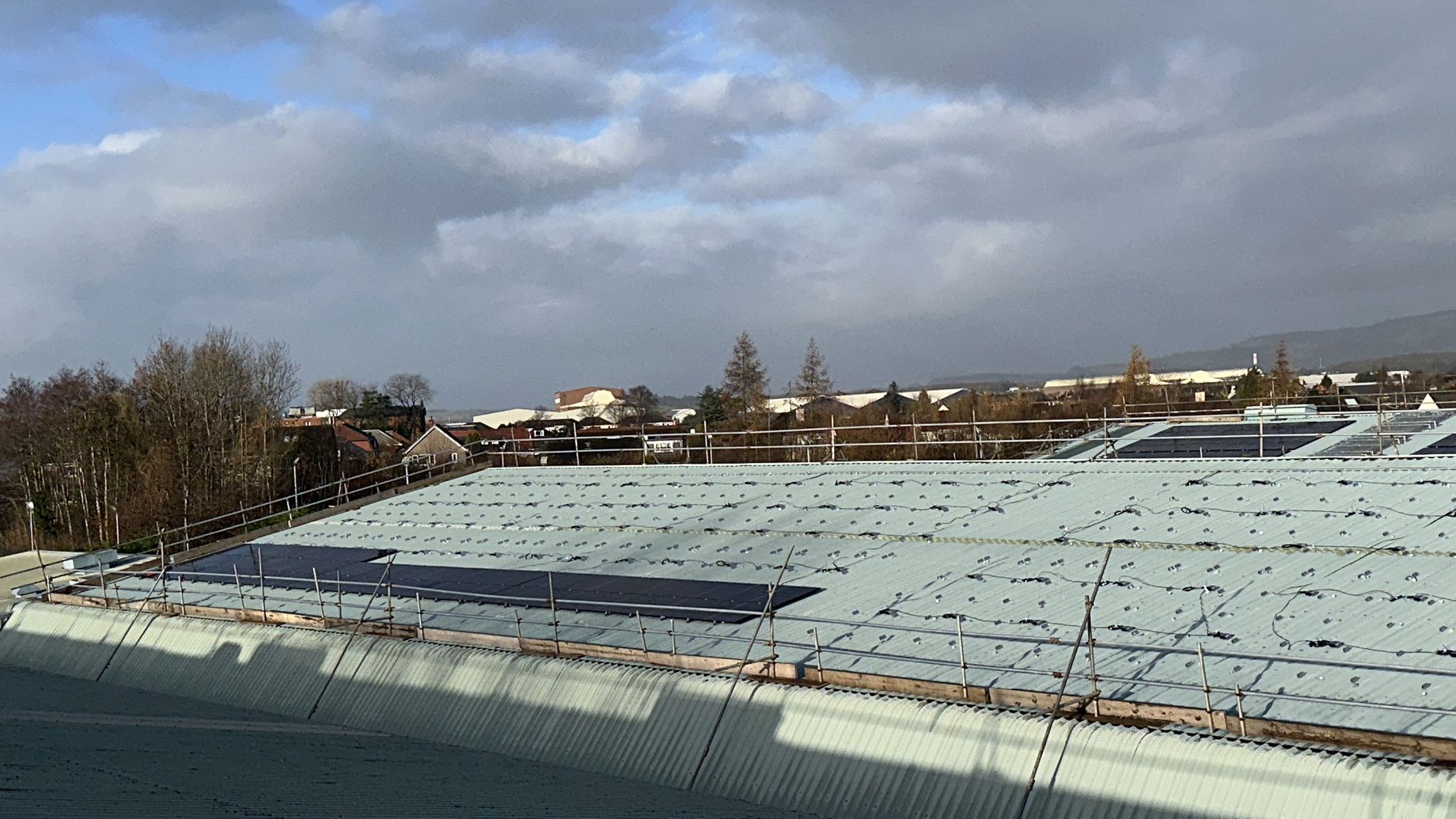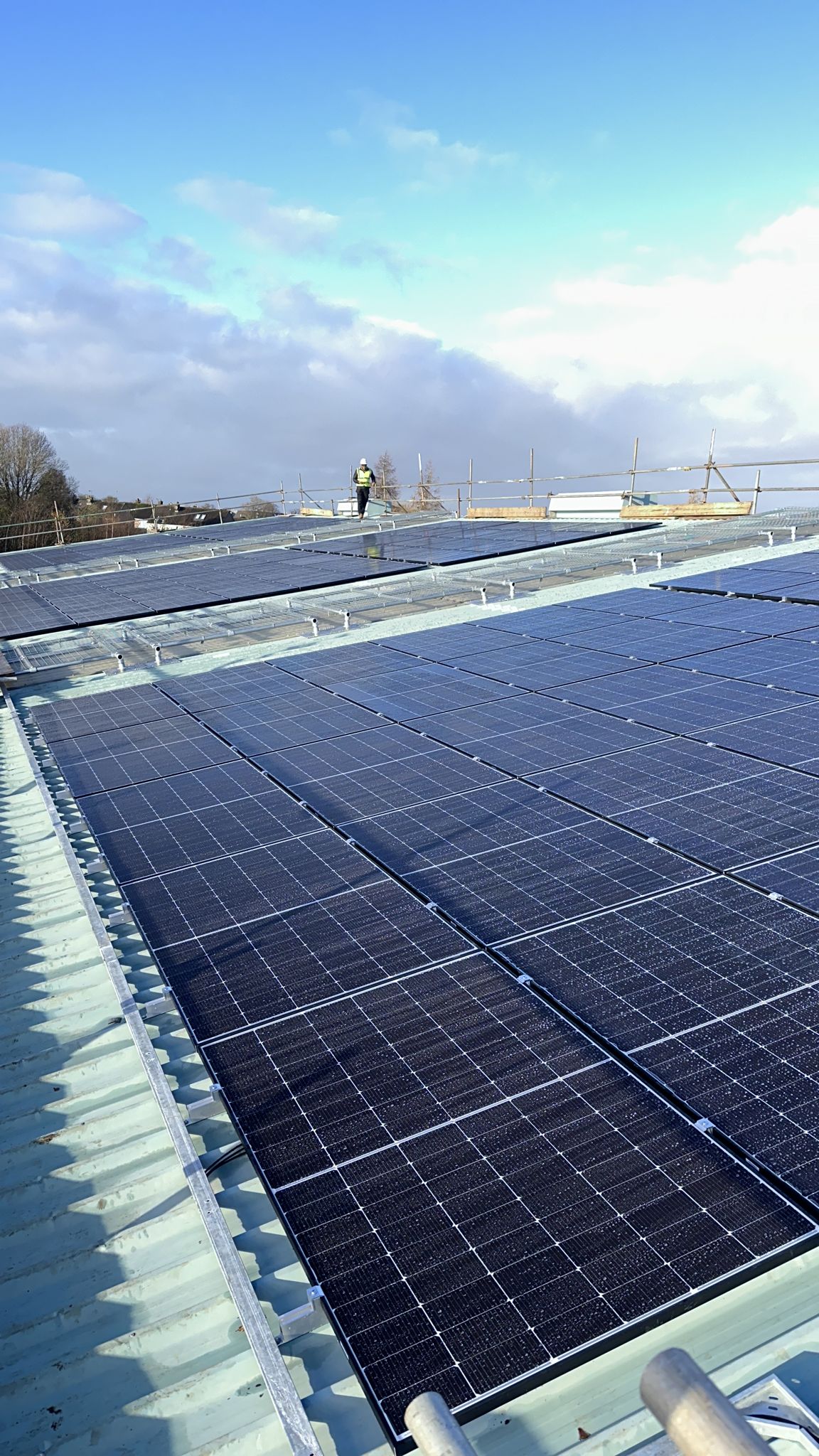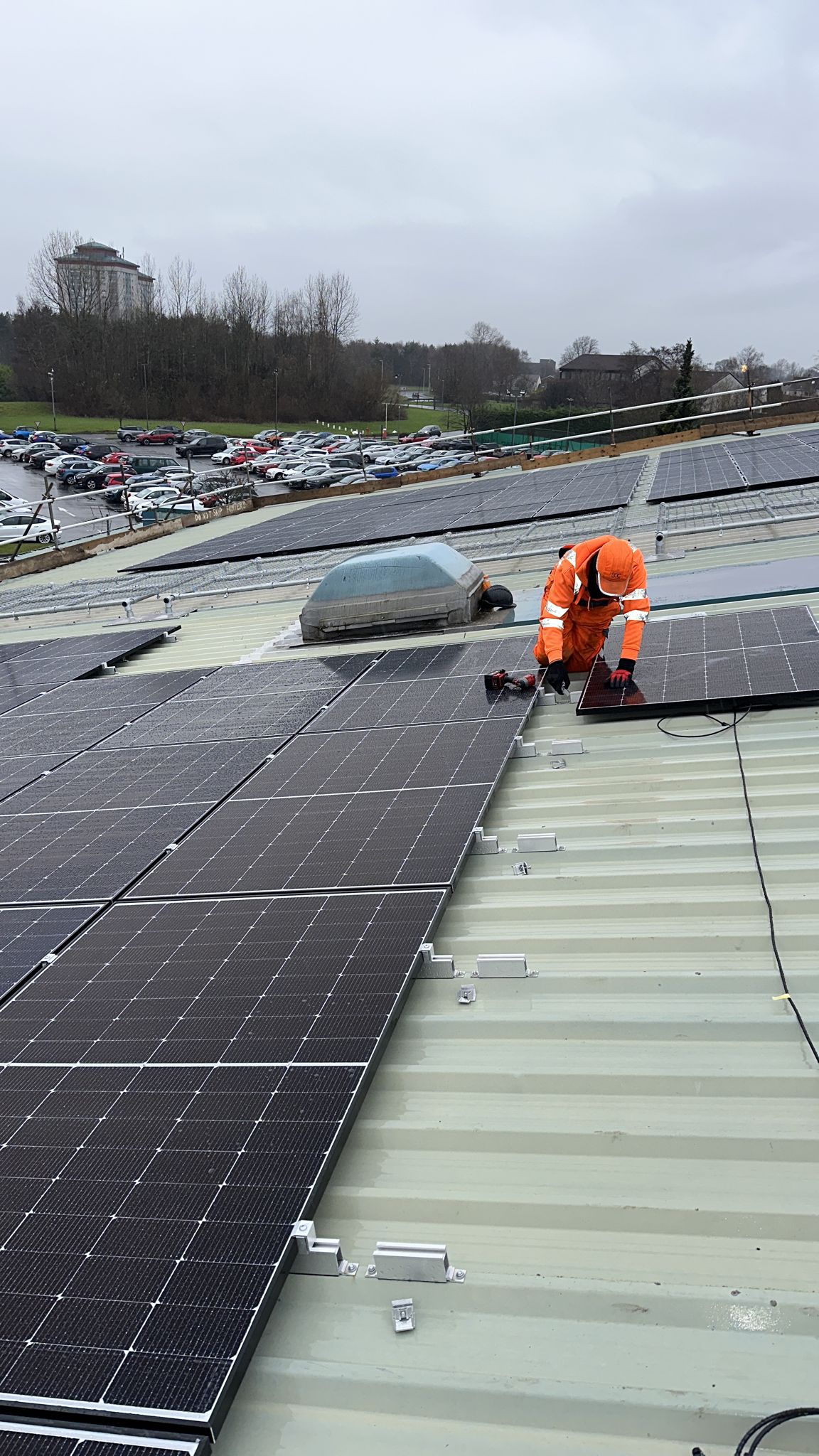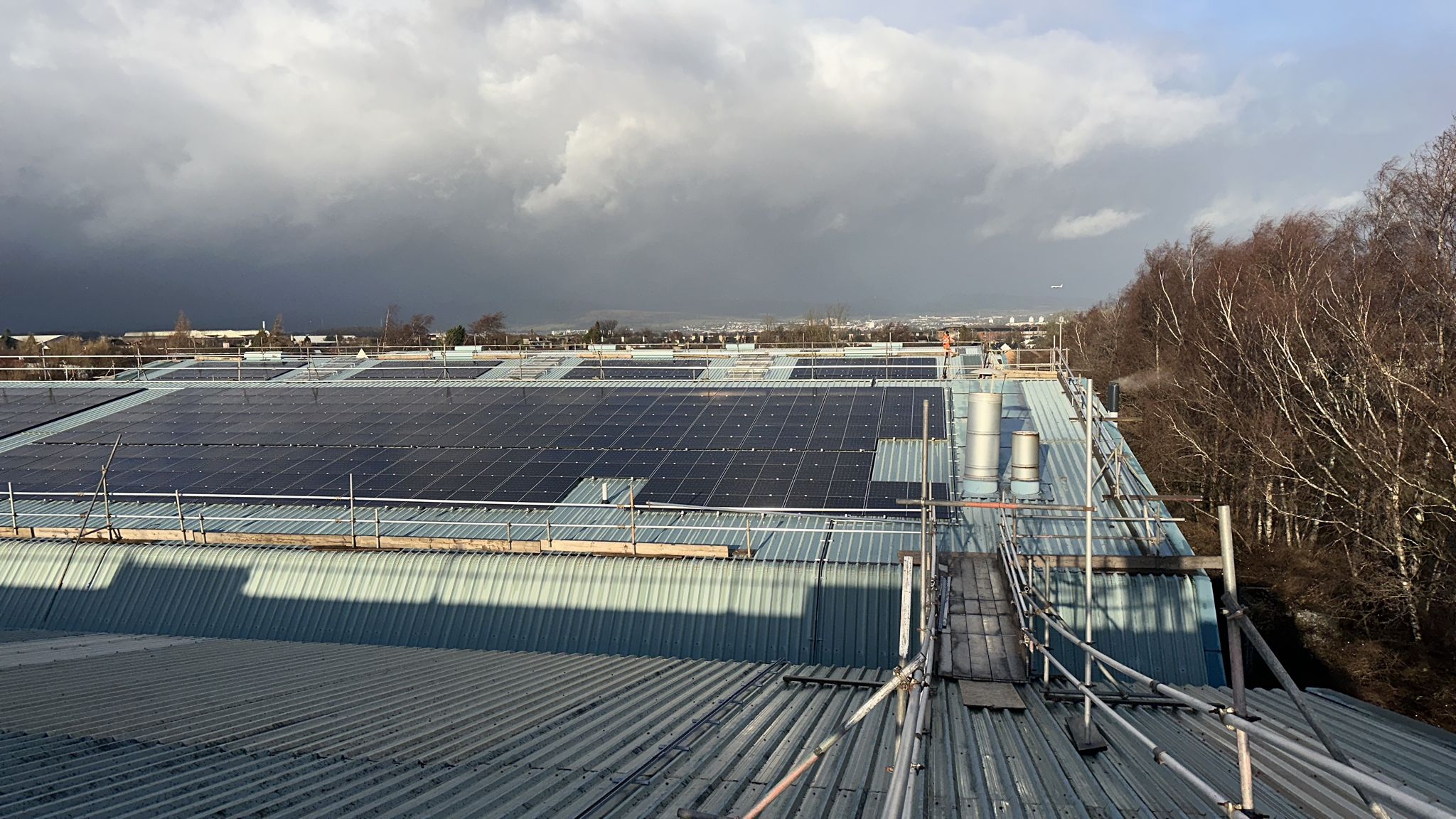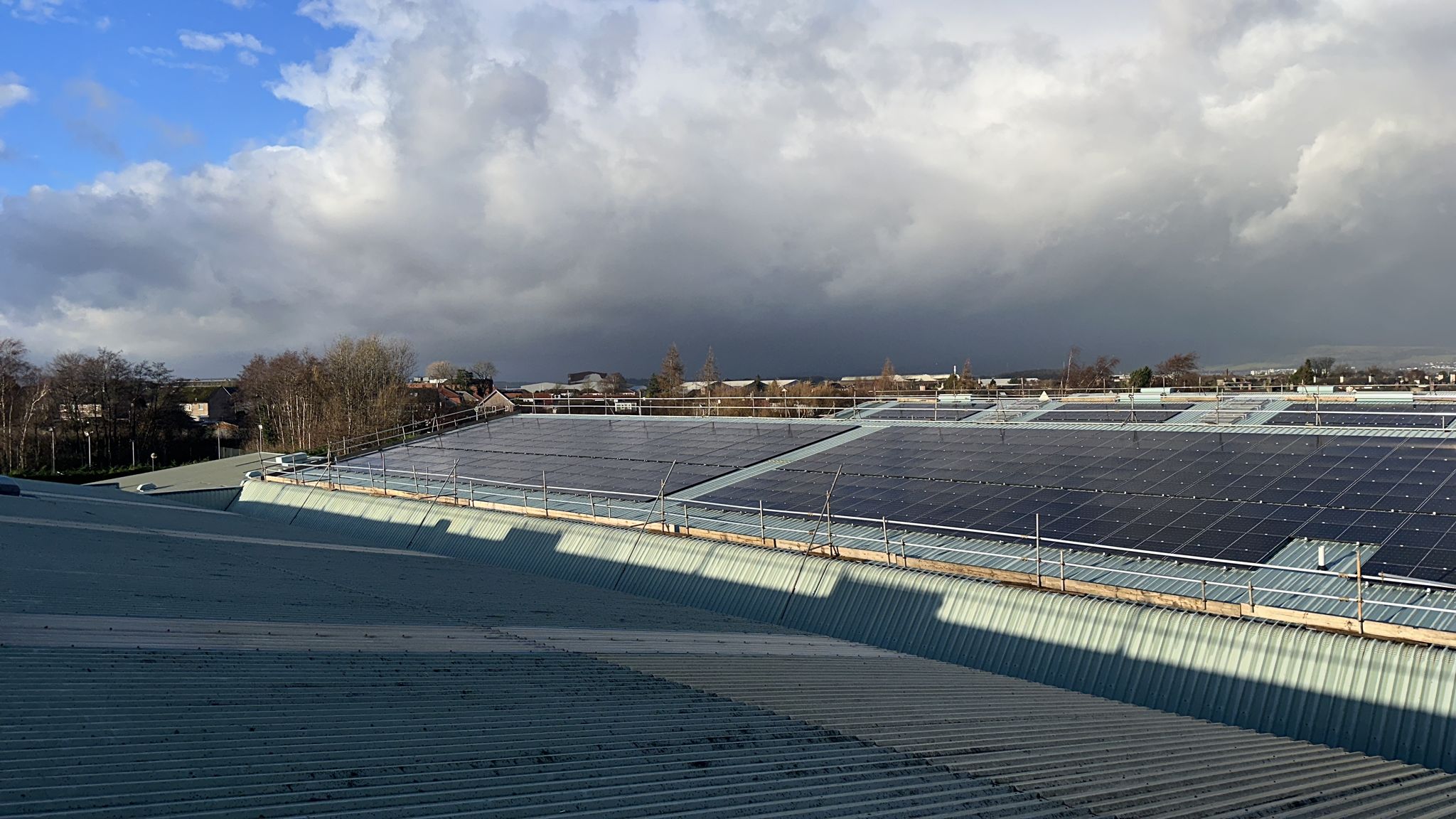
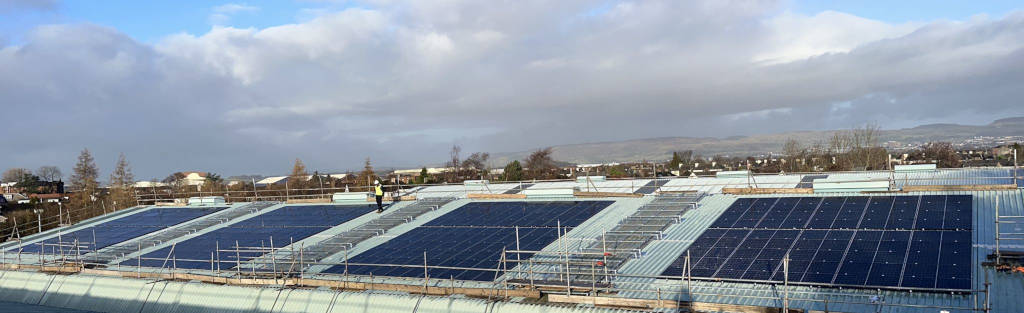
David Lloyd Clubs have set an ambitious goal to become carbon neutral by 2030. As part of that mission, their Renfrew location in Scotland partnered with us to take a significant step toward energy independence by installing a large-scale solar PV system.
Project Overview
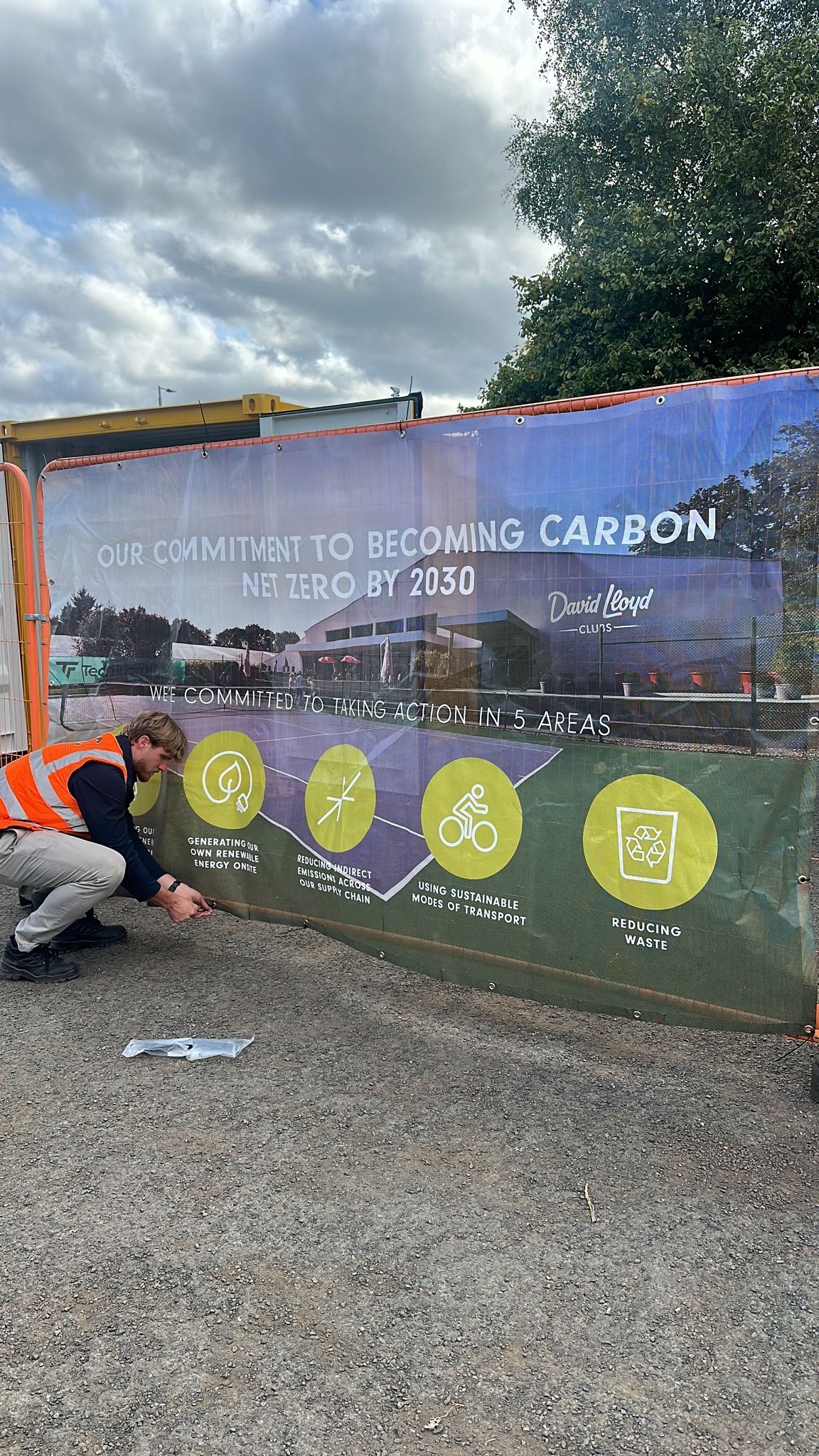
The solar panel installation at David Lloyd Renfrew spans three buildings across the site. To maintain a high standard of professionalism and minimise disruption to gym members, we established a secure site compound with clear signage to explain the project and its benefits. Waste disposal and secure material storage were carefully managed throughout the process.
System Details
The installed system features 659 high-efficiency, n-type bifacial double-glass solar modules, designed to capture energy from both sides for maximum output. It is supported by seven three-phase inverters and a power optimiser setup to ensure consistent performance. For safety and monitoring, we integrated a firefighter gateway for central safety management and an energy meter delivering highly accurate readings.
PV Generator Output: 293.26 kWp
Generator Surface Area: 1,316.8 m²
Annual Yield: 861.78 kWh/kWp
CO₂ Emissions Avoided: 52,313 kg/year
Process and Timeline
The project was delivered over a two-month period, including site setup, installation, and clearance. Our team completed a comprehensive site survey and produced detailed drawings covering the string layout, traffic management, mounting structure, module configuration, scaffold plan, and inverter positioning.
All installations were delivered in accordance with strict RAMS (Risk Assessment Method Statements), and upon completion, the client received a full handover pack including:
Inverter operating manuals
Electrical installation and test certificates
Maintenance recommendations
Ongoing Support
Our work doesn’t stop at installation. When the David Lloyd team reported a roof leak near the tennis courts post-install, we responded quickly. After inspecting and cleaning the gully, we identified areas of concern and sealed them using a roof repair kit and CT1 sealant. A two-hour water test confirmed a successful repair, reinforcing our commitment to post-installation care and client satisfaction.